Rupert Sheldrake's Background
Morphic Resonance: Rupert Sheldrake's Revolutionary Theory
Arcane SciencesContent Disclaimer: This article contains speculative theories presented for entertainment. Readers are encouraged to form their own conclusions.
Rupert Sheldrake began his career as a conventional biochemist. Educated at Cambridge and Harvard, he specialized in plant development and cell biology. His early work appeared in prestigious journals and followed established scientific methodologies.
But questions nagged at him. How do embryonic cells know what to become? How do organisms maintain their form across generations? The standard genetic explanations seemed incomplete.
> What Sheldrake would propose would make him one of the most controversial scientists of his generation, celebrated by some and condemned by others.
His research in India, studying plant physiology at an international agricultural institute, gave him distance from Western academic assumptions. There he began formulating ideas that would challenge biological orthodoxy.
Traditional biology explains development through DNA. Genes contain instructions that proteins execute. The form of an organism emerges from this genetic program.
But Sheldrake noticed problems with this explanation. The same genes are present in every cell, yet cells differentiate into vastly different types. The genome cannot explain the three-dimensional organization of tissues and organs.
> The question of how form arises from formless matter has puzzled thinkers since Aristotle. Modern genetics, despite its power, leaves this mystery largely unsolved.
Previous generations of biologists proposed "morphogenetic fields" to account for developmental patterns. These organizing fields shaped how organisms developed. But the fields were never identified or explained.
In 1981, Sheldrake published "A New Science of Life." The book proposed that form and behavior are shaped not only by genes and environment but by "morphic fields" containing collective memory.
These fields, he argued, are built up through repetition. Each time members of a species develop a particular form or learn a behavior, the field strengthens, making that pattern easier for others to acquire.
> Morphic resonance proposes that nature has memory, that patterns once established persist and influence subsequent similar systems.
The theory challenged fundamental assumptions about causation. Effects could precede causes across time. The past could directly influence the present without any known physical mechanism.
The scientific establishment reacted harshly. Nature magazine published a scathing editorial titled "A Book for Burning?" The editor suggested the book was "the best candidate for burning there has been for many years."
This reaction brought unexpected attention. The controversy ensured that people who might never have heard of morphic resonance became aware of it.
> The severity of the response suggested that Sheldrake had touched something sensitive in the scientific worldview.
Sheldrake noted that the editor admitted he had not read the entire book. The condemnation was more about protecting established paradigms than evaluating evidence.
Morphic resonance became associated with the "hundredth monkey" story. This popular tale claimed that once a critical number of monkeys on one island learned a new behavior, monkeys on distant islands spontaneously acquired it.
The story was largely fabrication, based on misrepresentation of actual primate research. Its association with morphic resonance damaged the theory's credibility.
> Sheldrake's ideas deserved evaluation on their own merits, not through the lens of popularized myths.
However, the underlying question remained valid. How do behaviors spread through populations? Do individuals somehow access collective learning?
Sheldrake was not the first to propose collective memory in nature. Jung's collective unconscious suggested shared psychological patterns. Henri Bergson wrote of "élan vital," a life force driving evolution.
Biologist Hans Driesch proposed "entelechy," an organizing principle in development. The concept of morphogenetic fields predated Sheldrake by decades.
> New ideas rarely emerge from nothing. They synthesize earlier intuitions with contemporary knowledge.
What distinguished Sheldrake's proposal was its specific mechanism. Morphic resonance offered a testable hypothesis about how collective memory might function.
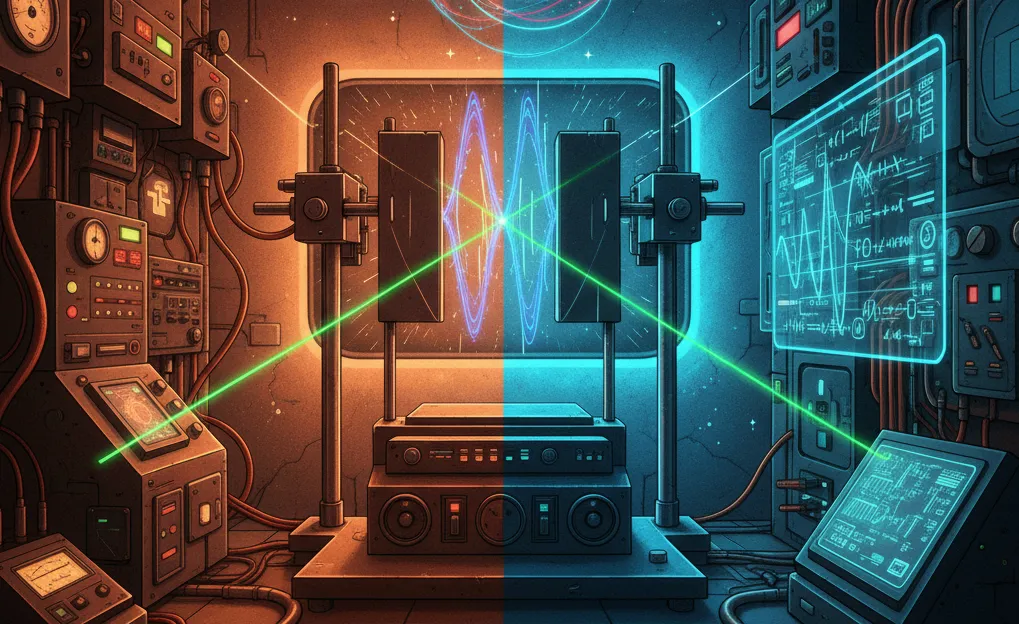
Sheldrake described morphic fields as probability structures. They do not contain matter or energy in the conventional sense. They shape patterns across space and time through resonance.
Similar systems resonate with each other across time. A developing organism tunes into the morphic field established by previous similar organisms. This guides its development without requiring genetic encoding of all details.
> The mechanism remains controversial precisely because it does not fit within established physics. This either indicates its falsity or reveals limitations in current scientific frameworks.
Sheldrake acknowledged that no known physical mechanism could explain morphic resonance. He proposed it nonetheless because he found the evidence compelling.
Sheldrake designed experiments to test his theory. If morphic resonance occurs, learning should become easier for later individuals once earlier individuals have mastered a task.
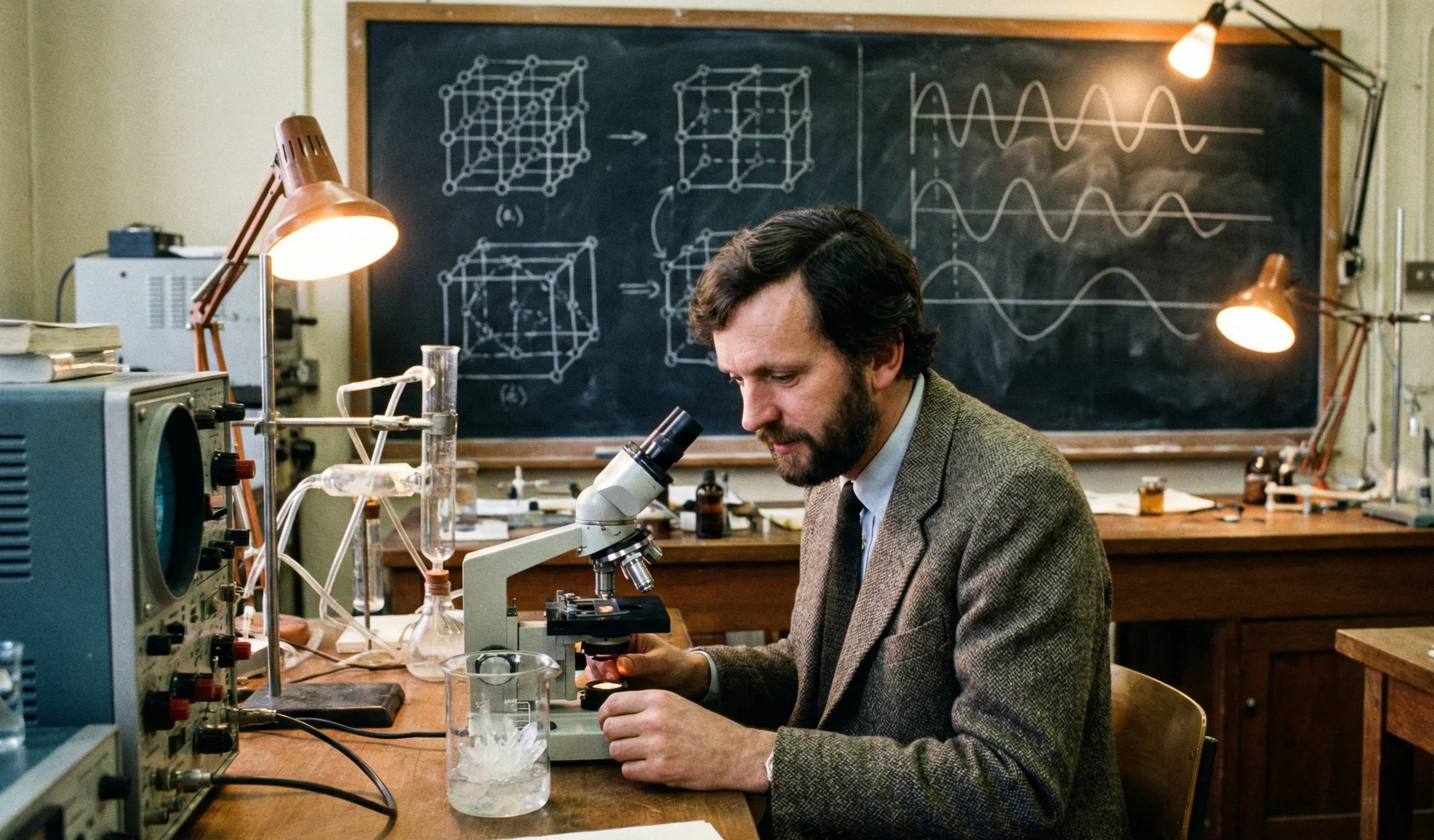
He proposed testing whether humans could learn new Morse codes more easily than older ones, whether rats found old maze solutions easier than new ones, and whether crystal formation patterns propagated across space.
> The experiments were difficult to conduct rigorously, and results remained controversial.
Some studies seemed to support the theory. Others found no effect. The scientific community largely dismissed the research, but investigations continued.
In 1988, Sheldrake published "The Presence of the Past," expanding his theory to include all natural systems, not just biological ones. Crystals, molecules, and even physical constants might be shaped by morphic fields.
He proposed that the laws of nature themselves evolved. What we call laws are more like habits, patterns established through repetition rather than timeless mathematical truths.
> This extension made the theory more comprehensive but also more radical in its implications for scientific worldview.
If physical constants are not truly constant, if the laws of physics are habits rather than rules, fundamental assumptions of modern science would require revision.
Mainstream scientists largely rejected morphic resonance. The theory violated established principles. No physical mechanism explained how resonance could occur across space and time.
Critics argued that Sheldrake replaced one mystery with another. Saying morphic fields cause pattern formation explains nothing unless the fields themselves are explained.
> The debate illustrated the boundaries of acceptable scientific discourse. Ideas that challenge paradigms face resistance beyond what evidence alone would warrant.
Sheldrake responded that Newton's gravity also lacked mechanism. Action at a distance was mysterious yet undeniably real. Perhaps morphic resonance was similarly mysterious yet equally real.
Related Articles