Content Disclaimer: This article contains speculative theories presented for entertainment. Readers are encouraged to form their own conclusions.
When the Great Pyramid of Giza was completed around 2560 BCE, it stood as the tallest structure on Earth. It would hold that record for nearly four thousand years.
The pyramid was built for Pharaoh Khufu, the second ruler of the Fourth Dynasty. It required an estimated 2.3 million stone blocks, each weighing an average of 2.5 tons. The workforce that constructed it remains a subject of debate, but the logistics were staggering by any measure.
Yet the pyramid's true marvel was not its size. It was its precision.
The base is level to within 2.1 centimeters across 230 meters. The sides align with the cardinal directions to an accuracy of 3/60th of a degree. The internal chambers and passages demonstrate mathematical relationships that still challenge modern architects.
The builders understood something we have only recently begun to appreciate. They built not just a tomb, but a puzzle.
Inside the pyramid, three known chambers exist. The subterranean chamber, carved into bedrock beneath the structure. The Queen's Chamber, a misnomer since it likely never held a queen. And the King's Chamber, which contains a granite sarcophagus that was found empty.
Connecting these chambers are precisely engineered passages. The Grand Gallery rises at a 26 degree angle for 47 meters. The Ascending Passage connects to the entrance corridor. Ventilation shafts extend from the chambers toward the pyramid's exterior.
But the ancient builders included features that seemed to serve no purpose. Passages that ended in blank walls. Shafts that stopped short of the surface. Spaces that appeared designed to hide something.
For centuries, explorers searched for secret chambers. The Arab caliph Al-Ma'mun tunneled through limestone blocks in 820 CE, hoping to find treasure. He found the passages that led to the known chambers, but the sarcophagus was already empty.
Subsequent explorers mapped every accessible space. They measured. They theorized. They disagreed about almost everything.
But one question persisted. Were there spaces inside the pyramid that no one had ever seen?
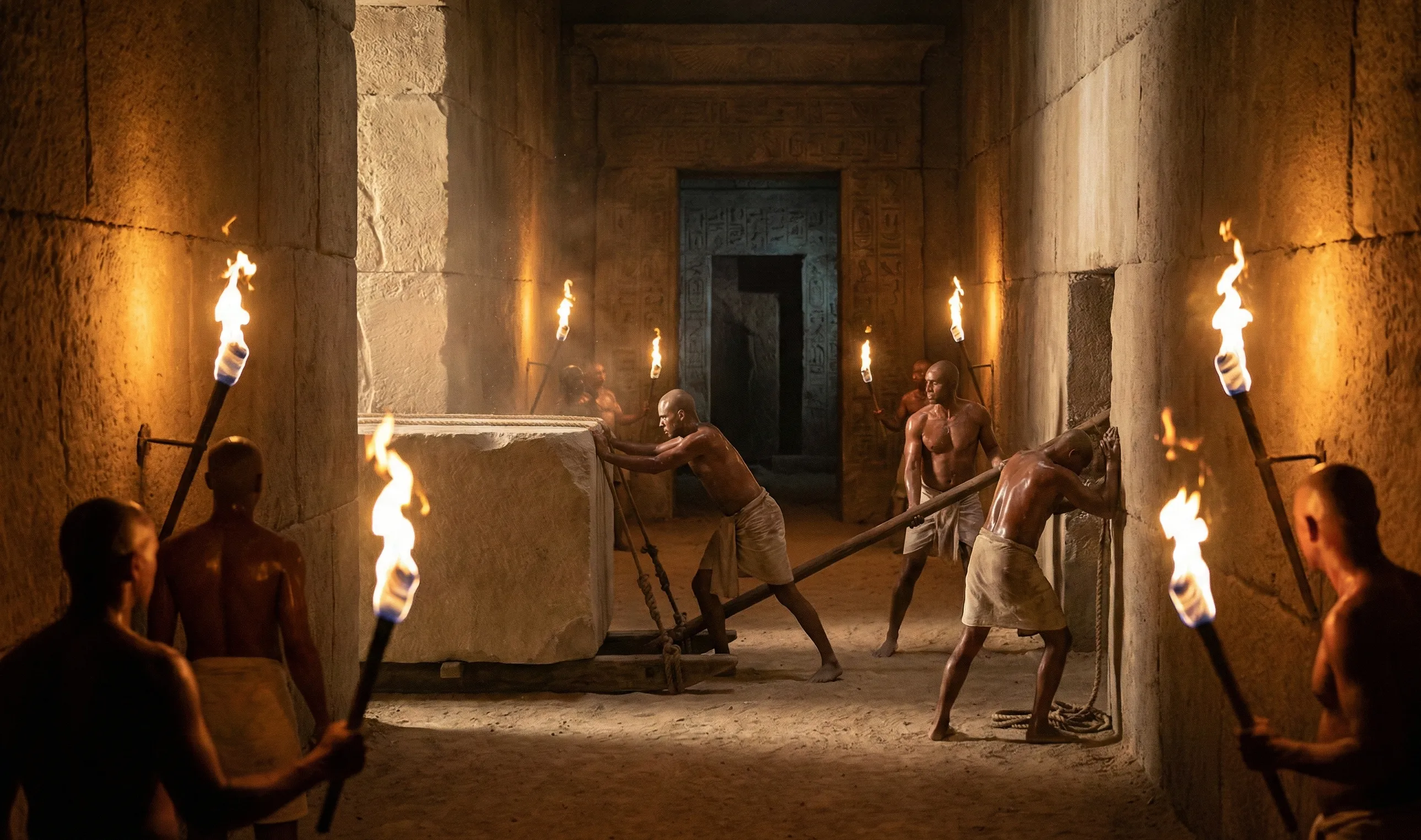
The builders knew the answer. They included false passages and dead ends, architectural features designed to confuse any who came searching. They sealed chambers with multi-ton granite blocks. They created a maze of stone that would protect their secrets for millennia.
The question was whether those secrets still remained hidden, waiting for someone with the right tools to find them.
Related Articles