Content Disclaimer: This article contains speculative theories presented for entertainment. Readers are encouraged to form their own conclusions.
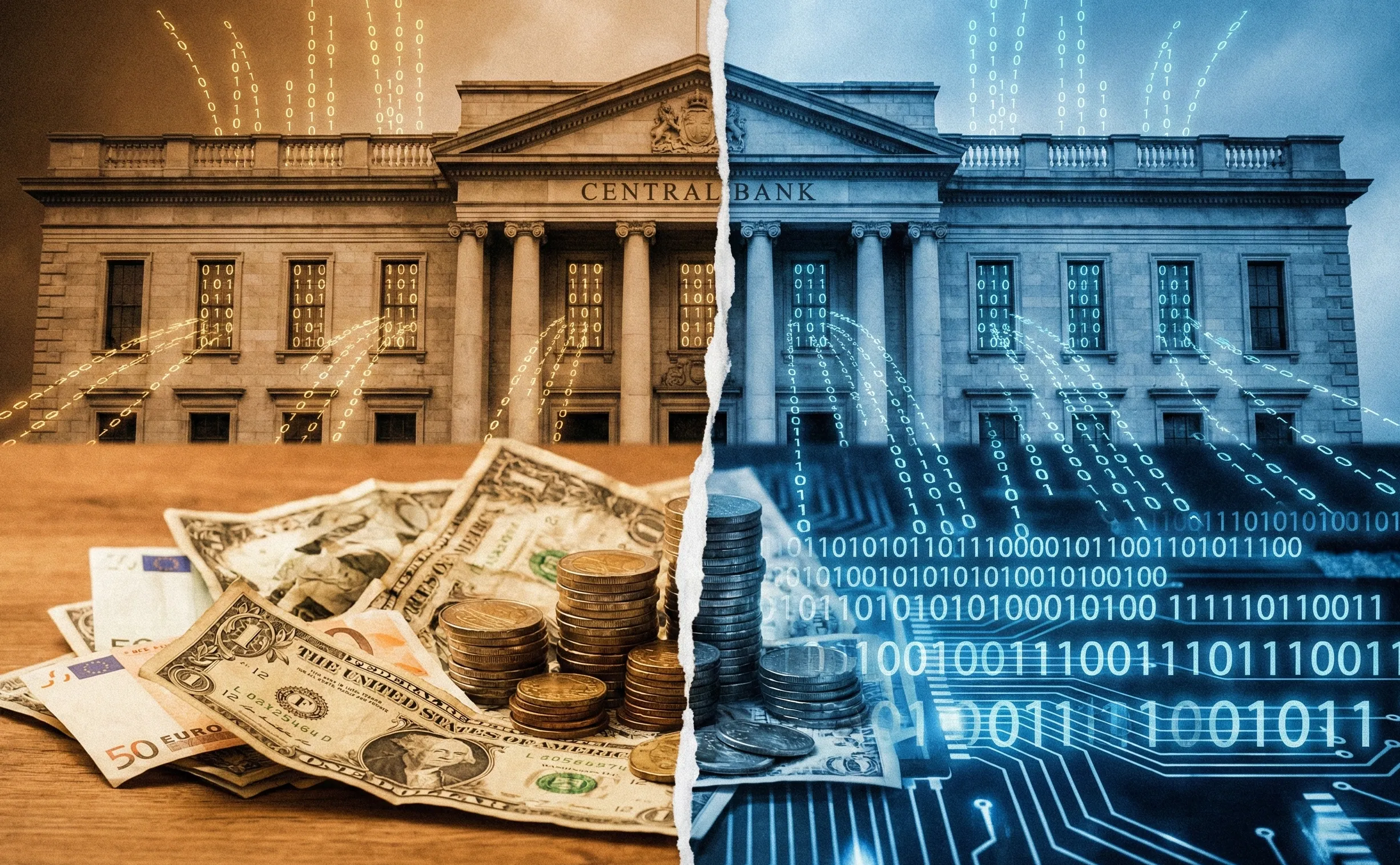
For most of human history, money was physical. Cowrie shells passed between hands in ancient markets. Gold and silver coins jingled in purses across civilizations. Paper notes rustled in wallets for centuries.
You could hold your wealth. Hide it under a mattress. Hand it to another person in a transaction that existed only between the two of you.
> No record was created. No third party was informed. The exchange of value was as private as a whispered conversation.
Digital payments changed this gradually, then suddenly. Credit cards appeared in the 1950s and created the first comprehensive transaction records. Every purchase logged, dated, categorized.
Bank transfers left similar trails through the financial system. Each innovation made transactions more convenient and simultaneously more visible. Convenience and surveillance advanced together, often in the same system.
Then came Bitcoin in 2009. Emerging from the financial crisis with a radical proposition. A currency that existed only as code, maintained by a distributed network with no central authority.
No government issued it. No bank guaranteed it. Value was established purely through consensus and cryptographic verification.
Bitcoin was slow, volatile, and difficult to use. But it demonstrated something that caught the attention of governments worldwide. Money itself could be programmable.
Central banks took notice. Though not of what Bitcoin's creators had intended. The decentralization that cryptocurrency advocates celebrated represented a threat to governmental monetary control.
But the underlying technology suggested possibilities. What if governments could issue their own digital currencies? Not to escape state control but to perfect it.
China moved first with serious intent. The People's Bank of China began researching a digital yuan in 2014, years before most central banks considered the concept.
The motivation was partly defensive. Chinese authorities worried about the growing dominance of Alipay and WeChat Pay. Trillions in transactions were flowing outside direct government view. A state digital currency could restore visibility and control.
By 2020, pilot programs launched in major cities. Shenzhen. Suzhou. Chengdu. Xiong'an. Citizens received digital yuan through lotteries, finding new currency in their phone apps like money appearing from nowhere.
They could spend it at participating merchants. Watch the balance change instantly. Experience a kind of money that was familiar yet fundamentally new.
The interface looked like any payment app. The architecture underneath was unprecedented.
The digital yuan was not cryptocurrency. It was the opposite. Where Bitcoin was decentralized, the digital yuan was fully centralized. Every token issued and tracked by the state.
Where Bitcoin offered pseudonymous transactions, the digital yuan was fully traceable. Every movement of value visible to authorities.
Where Bitcoin existed to escape government control, the digital yuan existed to perfect it. The technology was similar but the purpose was inverted.
Other central banks accelerated their research. The European Central Bank established a digital euro project. The Federal Reserve commissioned studies on a digital dollar.
The Bank of England explored possibilities. The Bank of Japan ran experiments. Central banks from Sweden to South Korea to Nigeria began weighing what digital currency might offer.
The official justifications centered on practical benefits. Financial inclusion for billions without bank accounts. Faster payments settling in seconds. Lower transaction costs. Competition with private digital currencies.
But the architecture went beyond efficiency. A central bank digital currency could be programmed in ways cash never could.
> Money that expires if not spent. Money that can only be used for approved purposes. Money that can be frozen instantly without court orders.
> Money that reports every transaction to the issuing authority in real time. The infrastructure for a new relationship between citizen and state was being designed.
Related Articles