Content Disclaimer: This article contains speculative theories presented for entertainment. Readers are encouraged to form their own conclusions.
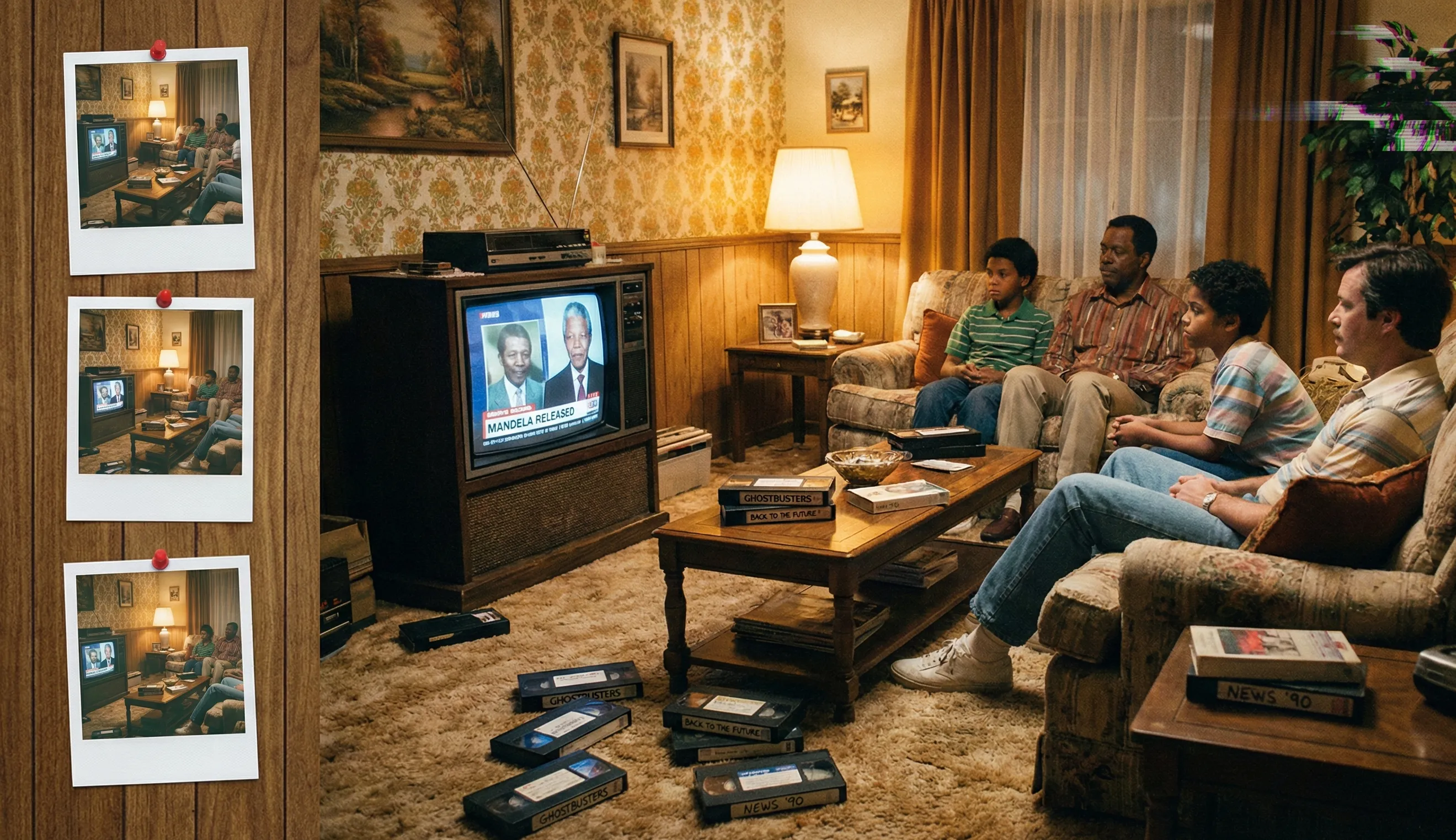
In 2010, a paranormal researcher named Fiona Broome was at a convention when she mentioned something about Nelson Mandela. She remembered him dying in prison in the 1980s. She remembered the funeral. She remembered the news coverage.
Someone else at the table nodded. They remembered it too.
The problem was, Nelson Mandela did not die in prison. He was released in 1990. He became president of South Africa. He died in 2013.
Broome was wrong. Simple memory error. Except it was not simple. Because thousands of people shared the exact same false memory. Not just that Mandela died earlier than he did. But specific details. The funeral. The widow's speech. News anchors breaking the story.
They all remembered something that never happened. And they remembered it the same way.
Broome coined the term Mandela Effect. What started as an interesting discussion at a convention became something larger. People began sharing other false memories. Memories that large groups held in common. Memories that contradicted documented reality.
The Berenstain Bears. Millions of people remember it being spelled Berenstein with an E. Not just spelled differently, but pronounced differently. They remember seeing the name on books, on the television show, everywhere. The reality is it has always been Berenstain with an A. Always.
Darth Vader's famous line. "Luke, I am your father." Except he never says Luke. The actual line is "No, I am your father." People who have seen the film dozens of times insist they remember Luke being addressed by name. They do not.
Snow White. "Mirror, mirror on the wall." The actual line in the Disney film is "Magic mirror on the wall." But millions swear they heard mirror twice.
These could be dismissed as simple errors. Misquotes that propagate through culture. The brain filling in gaps with what makes sense.
But the scale of it bothered people. The consistency. How could millions independently arrive at the exact same wrong memory?
Forums began cataloging examples. Logos that people remembered differently. Brand names with different spellings. Geographic locations in wrong places. Movie scenes that do not exist. Song lyrics that never were.
The Fruit of the Loom logo. Many people remember a cornucopia, a horn of plenty, behind the fruit. There is no cornucopia. There never was one. The company has confirmed this. Old advertisements, packaging from decades past, all show the logo without it. But people describe the cornucopia in detail. Its shape. Its color. Its position relative to the fruit.
Curious George's tail. Many remember him having a tail. He does not. He never did.
The Monopoly Man's monocle. He does not wear one. Never has.
These are not obscure details. These are cultural touchstones. Things people have seen thousands of times. How can so many be so confidently wrong?
The easy answer is that memory is unreliable. This is well documented in cognitive science. We do not record experiences like a camera. We reconstruct them each time we remember. And reconstruction introduces errors.
Confabulation. The brain filling in gaps with plausible information. Suggestion. One person misremembers, shares it, and the error spreads. Source confusion. Memories from different sources blending together.
All of these are real phenomena. All of them contribute to the Mandela Effect.
But for some people, that explanation felt incomplete. The consistency was too precise. The details too specific. The emotional certainty too strong.
What if, they asked, the memories were not wrong? What if reality had changed?
This is where the Mandela Effect became something more than a curiosity about memory. It became a theory. A belief system. A lens through which to view the nature of existence itself.
Some proposed that we are sliding between parallel realities. Different versions of Earth with slightly different histories. You remember Berenstein because in your original timeline, that is how it was spelled. At some point, you shifted to a timeline where it is Berenstain. Your memory carried over. The evidence did not.
Others connected it to simulation theory. If reality is a computer simulation, glitches could occur. Patches could be applied. Things could be changed and most people would never notice. But some would. Their memories of the pre-patch version would persist.
Still others saw it through a spiritual lens. Reality is more fluid than we assume. Collective consciousness influences physical reality. When enough people believe something, it becomes true. Or was true. Until it changed.
None of these explanations satisfied everyone. Most scientists dismissed the entire phenomenon as a combination of poor memory and confirmation bias. People remember the wrong thing, find others who share the error, and convince themselves it must be significant.
But the experience remained. The feeling of certainty. The dissonance when shown evidence that contradicted what you knew. The unsettling possibility that your memories might not be anchored to anything solid.
The Mandela Effect touched something deep. Not because the examples themselves mattered. Who cares how the Berenstain Bears is spelled? But because it raised a question that matters very much.
How do you know what really happened?
Related Articles