Content Disclaimer: This article contains speculative theories presented for entertainment. Readers are encouraged to form their own conclusions.
The phrase Internet of Things first appeared in 1999. Kevin Ashton coined it while working on supply chain technology at Procter and Gamble.
The idea seemed simple. Take everyday objects. Give them sensors, processors, network connections. Let them communicate with each other and with central systems.
The physical world would become as networked as the digital one.
Early implementations were industrial. Sensors monitored manufacturing equipment. Logistics companies tracked shipments across global supply chains. Power companies detected grid problems instantly.
The objects being connected were machines in factories. Not items in ordinary homes.
The consumer vision took longer to materialize. Imagine a refrigerator that knew when you needed milk. A thermostat that learned your preferences. Lights that adjusted automatically.
A home that anticipated your needs. The smart home concept promised to eliminate daily friction through ambient intelligence.
The infrastructure prerequisites gradually fell into place. Wireless networks became ubiquitous. Sensors grew cheaper and smaller. Cloud computing provided unlimited processing power.
Smartphones created a universal interface. A computer in every pocket serving as remote control for connected devices.
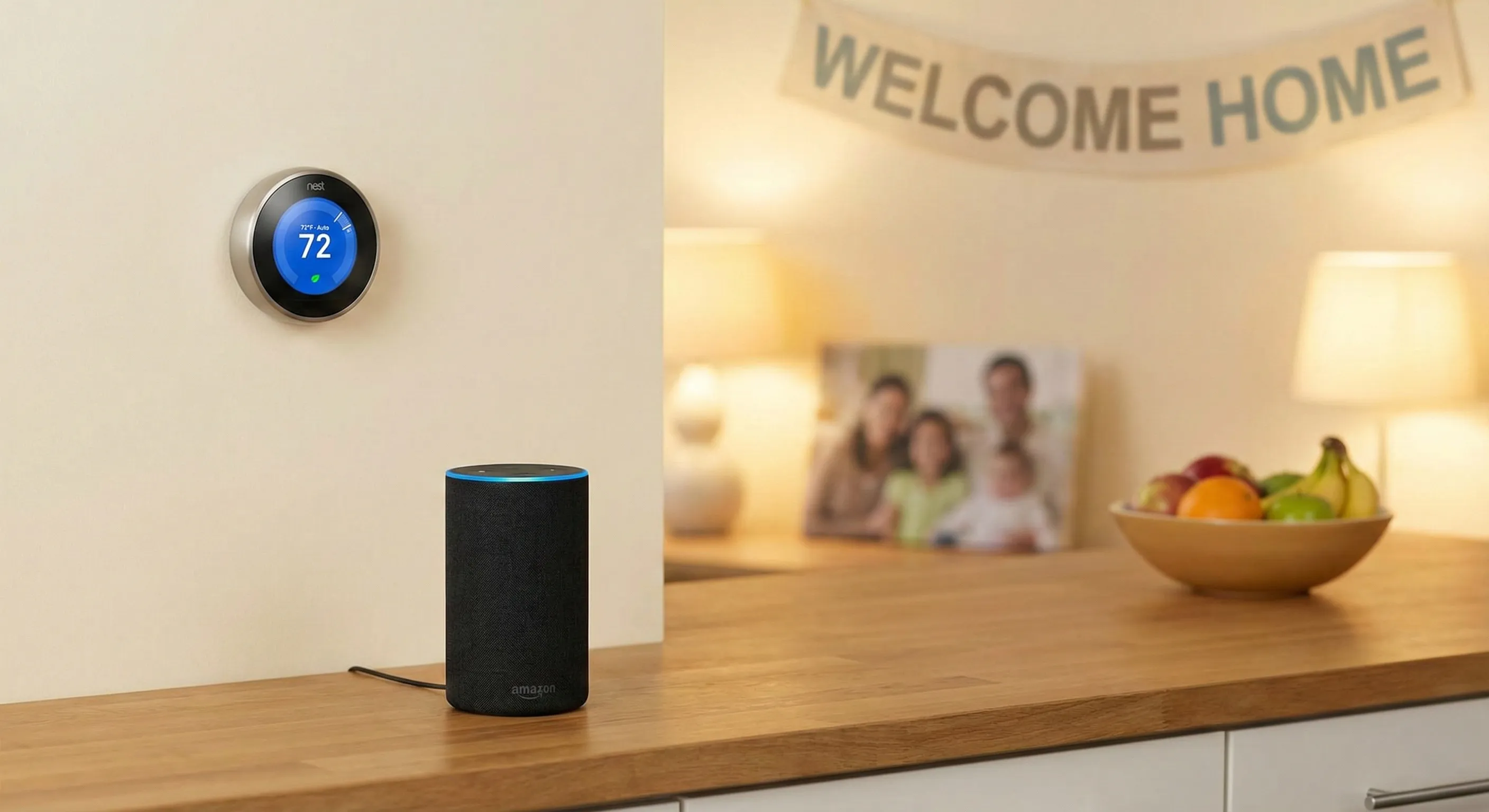
By 2010, the pieces were ready. Companies began releasing smart home products in earnest. Nest launched its learning thermostat in 2011. Philips introduced connected light bulbs.
Samsung, LG, and other makers added network connectivity to refrigerators, washing machines, ovens. Whether the connection served obvious purpose or not.
Amazon changed the landscape with the Echo in 2014. A speaker with a voice assistant named Alexa. Designed to sit in living rooms and kitchens. Always listening for its wake word.
When you spoke its name, Alexa could control devices, answer questions, play music, make purchases. The convenience was immediately compelling.
> The device sat in millions of homes within years. Its microphones active around the clock. Waiting.
Google followed with Home. Apple launched HomePod. Samsung acquired SmartThings. The tech giants recognized the connected home as a new platform.
A new way to reach consumers in their most private spaces. A new source of data about how people actually lived.
The voice assistant became the command center. A friendly interface to an expanding network of devices promising effortless interaction.
The convenience was genuine. Asking for music was easier than finding your phone. Adjusting the thermostat by voice beat walking to the wall.
Checking who rang the doorbell from anywhere provided peace of mind. Small conveniences accumulated into meaningful improvements.
What received less attention was the data these devices collected. Every voice command recorded and transmitted. Every adjustment logged. Every pattern analyzed.
> The smart home was learning its inhabitants in ways they did not fully understand. Often did not know to ask about.
Related Articles