Content Disclaimer: This article contains speculative theories presented for entertainment. Readers are encouraged to form their own conclusions.
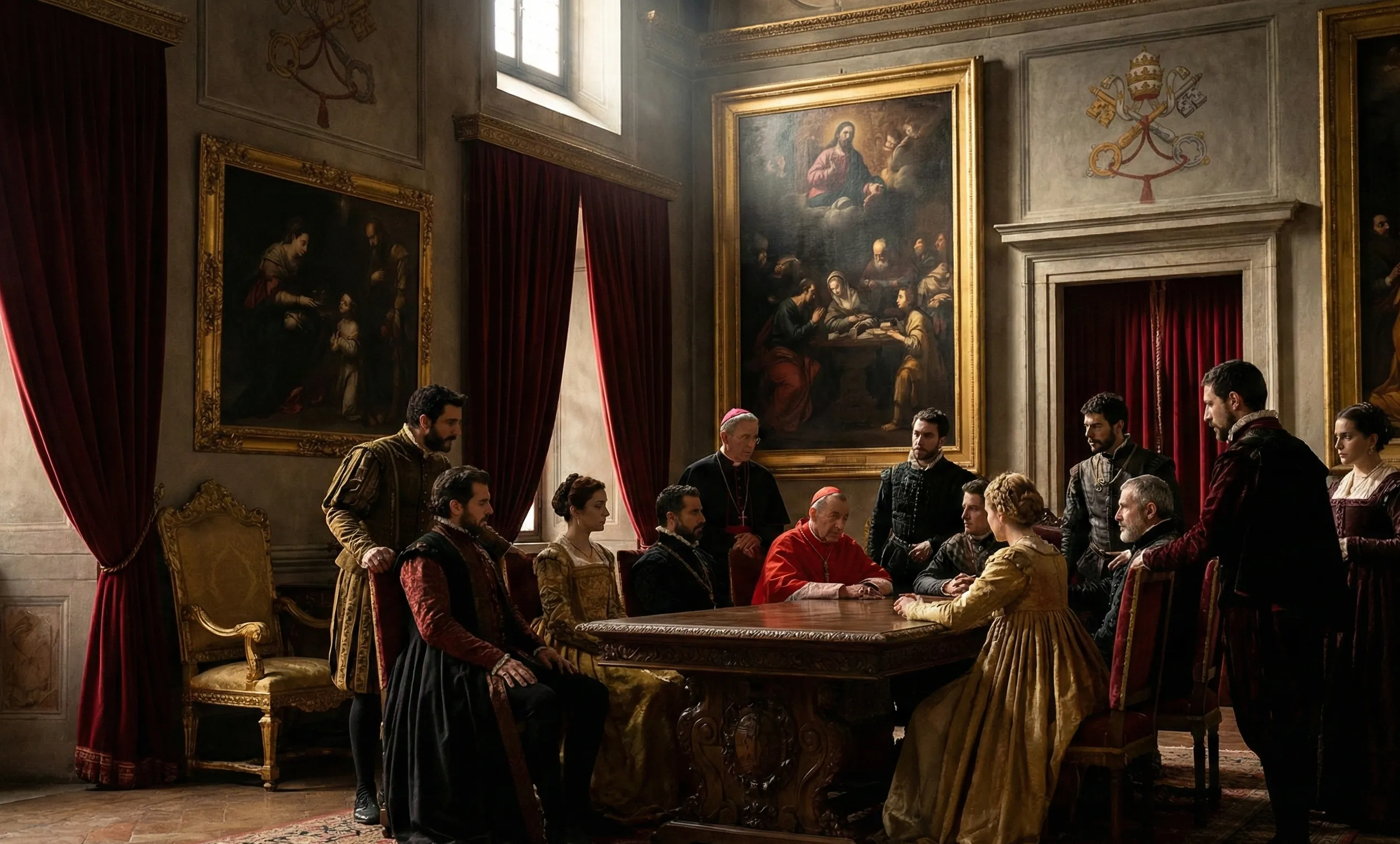
The term Black Nobility originally referred to Roman aristocratic families who remained loyal to the Papacy after the unification of Italy in 1870. When the new Italian state seized Rome and the Papal States, these families closed their shutters in mourning and protest. The darkness of their palaces gave them their name.
But the families themselves were far older than this 19th century crisis. Their roots extended into the medieval period, when serving the Pope meant access to wealth and power that rivaled any secular kingdom.
> The Black Nobility represented centuries of accumulated influence centered on the most durable institution in Western civilization.
The Colonna family traced its lineage to the 12th century and possibly earlier. They produced popes, cardinals, and military commanders. Their palazzo in Rome stood as testimony to wealth accumulated across generations. Political influence followed from financial and ecclesiastical position.
The Orsini family rivaled the Colonna in antiquity and power. For centuries these two families dominated Roman politics, sometimes cooperating, often feuding. Three popes came from the Orsini line. Their connections extended throughout the Italian peninsula and beyond.
The Medici of Florence achieved prominence through banking rather than inherited nobility. They became the principal bankers to the Papacy, managing the flow of funds that sustained the Church's temporal operations. This financial relationship led to political power and eventually to popes of their own blood.
> Banking and religion intertwined in ways that enriched both the Church and its financial partners.
The Papal States required administration that popes could not manage alone. Noble families provided the bureaucrats, soldiers, and diplomats who ran this ecclesiastical kingdom. In return, they received titles, lands, and privileges that passed through generations.
The Vatican's financial operations grew increasingly sophisticated over centuries. The collection of tithes, the sale of indulgences, the management of estates all required financial expertise. Banking families who served these needs prospered enormously.
The Borghese family rose to prominence in the 17th century when Camillo Borghese became Pope Paul V. The family accumulated art, land, and influence that persists to this day. Their trajectory illustrated how papal favor could transform fortunes.
> A single papal election could elevate a family to permanent prominence, or destroy rivals who had backed the wrong candidate.
The Farnese, Barberini, Pamphili, and other families followed similar paths. Each produced cardinals and popes. Each accumulated wealth through ecclesiastical service. Each became part of the interlocking network of Roman nobility.
These families intermarried extensively. The genealogies of Roman aristocracy form a web of connections that makes tracing distinct lineages difficult. Wealth and titles circulated through marriages that consolidated power rather than dispersing it.
The Protestant Reformation and the wars of religion that followed disrupted but did not destroy this system. The Papacy lost northern Europe but retained its core territories and its claim to spiritual authority. The families that served it adapted to changed circumstances.
> Religious upheaval tested the papal system but also demonstrated its resilience.
By the 18th century, the Black Nobility had established patterns that would persist through subsequent disruptions. They controlled land, managed finances, and wielded political influence through relationships rather than formal office. This informal power often exceeded official authority.
The French Revolution and Napoleonic Wars brought new challenges. Republican and imperial armies occupied Rome. The Pope was taken prisoner. The old order seemed on the verge of collapse. Yet the families survived, retrieving their positions when the storm passed.
The 19th century unification of Italy posed the ultimate challenge. The Papal States ceased to exist as a territorial entity. The Pope became a prisoner in the Vatican. The families who had derived power from papal temporal rule lost their political foundation.
> The loss of the Papal States transformed the Black Nobility from rulers to courtiers of a diminished power.
Yet the families persisted. Their wealth remained. Their social position, though diminished, continued. Their connections to the Vatican, now a spiritual rather than temporal power, retained value. They had survived worse than Italian nationalism.
The reconciliation between Italy and the Vatican in 1929 ended the formal estrangement. But by then, the Black Nobility had adapted to a world where aristocratic privilege mattered less than it once had. They had diversified into business, married into industrial wealth, and maintained relevance through new means.
Related Articles