Content Disclaimer: This article contains speculative theories presented for entertainment. Readers are encouraged to form their own conclusions.
The concept of a supreme ruling council directing world affairs has roots stretching back centuries. Long before John Coleman published his controversial claims, the idea that a small group of powerful individuals controlled global events captured imaginations and fueled speculation.
In 1727, the British East India Company had established itself as one of the most powerful commercial entities in human history. This trading corporation wielded influence that rivaled nation states. It maintained private armies, controlled vast territories, and shaped the destinies of millions.
> The East India Company represented something new in human organization: a commercial entity with the power of an empire.
Coleman traced the origins of the Committee of 300 to this period. He claimed that the merchant families who profited from the East India Company's operations formed a coordinating body to protect and expand their interests. This was allegedly the seed from which the modern Committee grew.
The Venetian banking families of the medieval period also feature in this origin story. These financiers had perfected techniques of accumulating wealth and wielding influence that would later spread throughout Europe. They understood that controlling money meant controlling power.
The transition from Venetian to British financial dominance marks an important chapter in this narrative. As Venice declined, the knowledge and practices of its merchant aristocracy reportedly migrated to new centers of power. London became the new Venice, inheriting both its commercial acumen and its traditions of oligarchic rule.
> Financial dynasties do not simply disappear. They adapt, relocate, and continue their operations under new names in new places.
The founding of the Bank of England in 1694 created an institution that would become central to global finance. Private bankers gained the power to create money and lend it to governments. This arrangement placed enormous influence in private hands, influence that would only grow over subsequent centuries.
The 18th century saw the rise of the Rothschild banking dynasty. Beginning in Frankfurt and spreading across Europe, the Rothschilds built a financial network of unprecedented scope. Their ability to move money across national boundaries and their role in financing wars and governments made them subjects of endless speculation.
Whether the Rothschilds ever joined a formal coordinating committee remains unproven. What is documented is their extraordinary influence on European affairs throughout the 19th century. They financed both sides of wars, underwrote governments, and accumulated wealth on a scale difficult to comprehend.
> The Rothschild network demonstrated what coordinated financial power could achieve across national boundaries.
The Congress of Vienna in 1815 reorganized Europe after the Napoleonic Wars. Some theorists see this event as an early exercise of Committee influence. The great powers gathered, but behind them stood the financiers who had funded their armies and now held their debts.
Cecil Rhodes, the British diamond magnate and empire builder, openly advocated for a secret society to promote Anglo Saxon dominance of world affairs. His will funded the Rhodes Scholarship program, but his private correspondence revealed grander ambitions. He dreamed of a group that would operate behind the scenes to shape history.
> Rhodes was unusual in committing his vision of secret influence to paper, providing theorists with documentary evidence of intent.
The Round Table movement, founded in the early 20th century to promote closer union of the British Empire, drew on Rhodes's inspiration. This network of discussion groups brought together influential figures in politics, finance, and journalism. It operated openly but with a coordinated agenda that some saw as a model for more secretive arrangements.
World War I shattered the old European order. In its aftermath, new institutions emerged to manage international affairs. The League of Nations, the Council on Foreign Relations, and the Royal Institute of International Affairs all claimed to promote peace and cooperation. Critics saw them as vehicles for elite coordination under a humanitarian disguise.
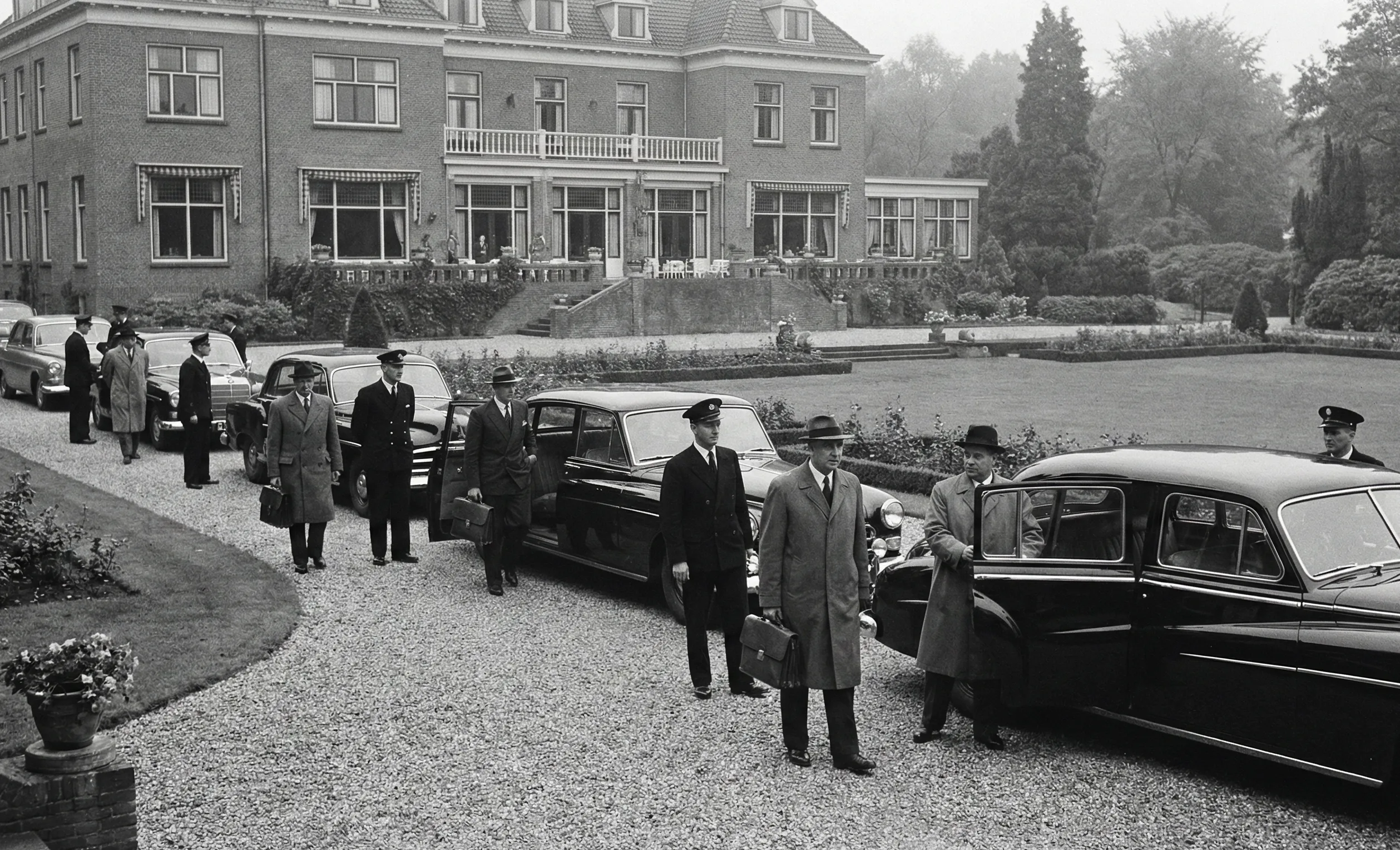
The Bilderberg meetings began in 1954, bringing together leaders from politics, finance, and media for private discussions. While organizers insisted these were innocent exchanges of views, the secrecy surrounding them fueled speculation. Here, perhaps, was the Committee meeting in plain sight.
> Each revelation of elite networking sparked new theories about what remained hidden.
John Coleman, a former British intelligence officer by his own account, published his Committee of 300 claims in the 1990s. He asserted that this body had directed world events for centuries, manipulating wars, economic crises, and political movements to advance its agenda of global control.
Coleman provided lists of alleged members, descriptions of organizational structure, and accounts of Committee operations. His work drew on earlier conspiracy theories, weaving them into a comprehensive narrative. Whether this narrative reflected hidden truth or creative imagination remains debated.
The historical record does confirm that wealthy and powerful individuals have long coordinated their activities. Business associations, social clubs, and policy organizations provide venues for such coordination. The question is whether these visible networks serve a hidden master organization, or whether they simply represent the natural tendency of elites to associate with their peers.
> The documented reality of elite networking provides both evidence for theorists and explanations for skeptics.
The past offers no definitive answer to whether the Committee of 300 exists. It does demonstrate that concentrated wealth seeks coordinated political influence, that secrecy often accompanies such efforts, and that the scope of elite networking has expanded as the world has become more interconnected.
Related Articles