Content Disclaimer: This article contains speculative theories presented for entertainment. Readers are encouraged to form their own conclusions.
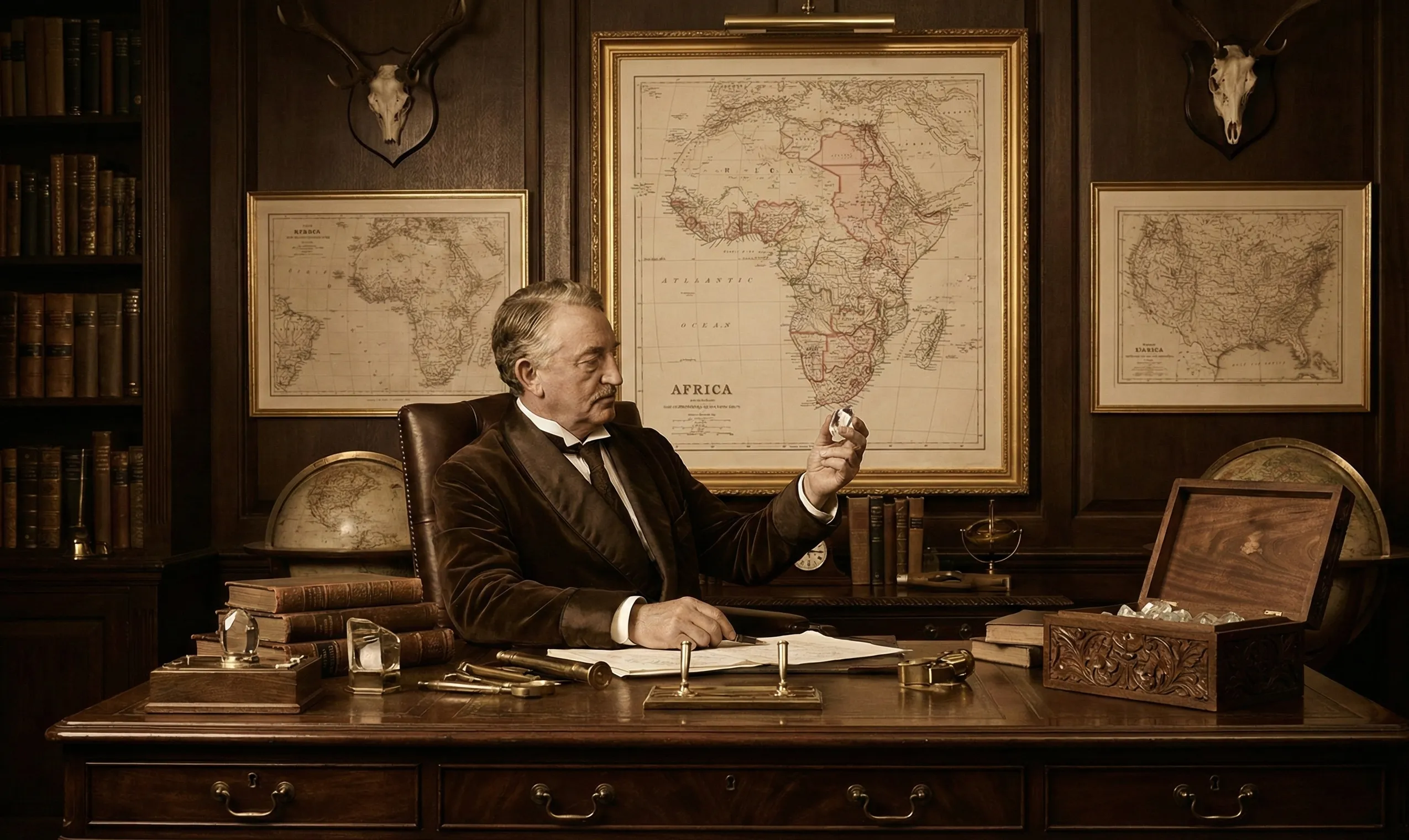
Cecil John Rhodes made his fortune in South African diamonds during the late 19th century. The De Beers company he founded controlled most of the world's diamond production. His wealth was enormous, but his ambitions extended far beyond commerce.
Rhodes believed in the superiority of Anglo Saxon civilization. He dreamed of unifying the English speaking peoples under a single global order. The British Empire, in his view, represented the highest achievement of human organization and deserved to expand until it encompassed the world.
> Rhodes combined ruthless business acumen with grandiose visions of civilizational mission.
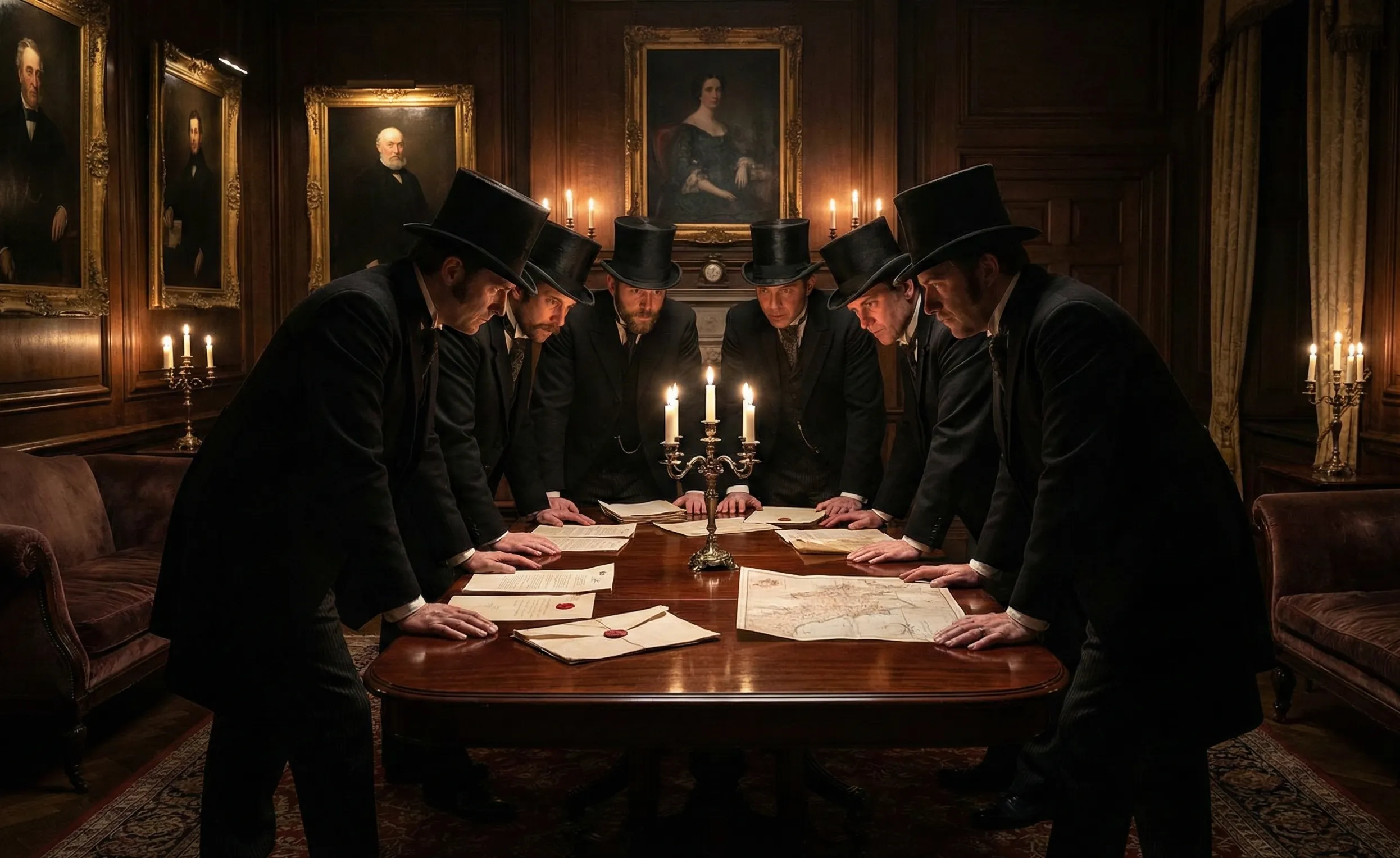
His private papers reveal ambitions that went beyond public advocacy. Rhodes wrote of creating a secret society modeled on the Jesuits, dedicated to expanding British influence and eventually achieving world federation under Anglo Saxon leadership. These were not idle fantasies.
Seven wills drafted throughout his life allocated his fortune to this mission. The Rhodes Scholarships, which bring students from around the world to Oxford, represent the public legacy of these plans. But Rhodes intended far more than educational philanthropy.
The final will established the Rhodes Trust under the direction of Lord Alfred Milner. Milner had served as High Commissioner for Southern Africa and shared Rhodes's vision of Anglo Saxon unity. He would become the organizational architect of what historians call the Milner Group.
> The connection between Rhodes's fortune and Milner's organizational ability created a network of unusual scope and ambition.
Around Milner gathered a group of young men who had served in South Africa. They called themselves Milner's Kindergarten. After returning to Britain, they maintained close connections and coordinated their careers to advance shared goals.
In 1909, this group formally established the Round Table movement. The organization took its name from King Arthur's legendary table where all knights sat as equals. This romantic allusion conveyed the fellowship and common purpose the founders intended.
Round Table groups were established throughout the British Empire: in Canada, Australia, New Zealand, South Africa, and India. Each group operated semi independently while coordinating through personal relationships and a shared journal, also called The Round Table.
> The Round Table created a network that spanned the globe while maintaining coherent direction through informal coordination.
The movement's stated purpose was promoting closer union of the British Empire. As self governing dominions gained autonomy, centrifugal forces threatened to dissolve imperial connections. Round Table members worked to strengthen bonds through federation or other constitutional arrangements.
World War I transformed the context for this work. The war demonstrated both the value of imperial cooperation and the strains that threatened it. Round Table members served in positions of influence throughout the imperial war effort.
Lionel Curtis, one of the most energetic members, developed ambitious proposals for imperial federation. His vision of organic union went further than most members accepted, but his energy drove the movement's agenda. Curtis would later help establish the Royal Institute of International Affairs.
> Individual personalities shaped the movement's direction as much as formal organizational structures.
The founding of the Royal Institute of International Affairs at Chatham House in 1920 marked a significant evolution. This think tank institutionalized Round Table methods in a more public form. Parallel organizations emerged in the dominions and, crucially, in the United States.
The Council on Foreign Relations established in New York the same year shared personnel and perspective with the Round Table network. American supporters of Anglo American cooperation found in CFR a vehicle for promoting their vision. The relationship between these organizations has attracted attention ever since.
> The coordination between British and American foreign policy elites represented a new form of transnational networking.
The interwar period saw Round Table members holding influential positions in British politics, journalism, and academia. They shaped coverage in The Times of London and influenced policy debates. Their views, particularly regarding Germany, proved controversial.
Some Round Table figures supported appeasement of Nazi Germany in the 1930s. They believed Germany had legitimate grievances and that conflict could be avoided through reasonable accommodation. This position, though widely shared at the time, later damaged their reputations.
By 1939, the original Round Table movement had evolved into something different from what Rhodes envisioned. Imperial federation had failed. The Dominions were more independent than ever. But the networks of personal relationships and the institutions they created persisted.
> The movement's concrete achievements fell short of original ambitions while its methods influenced subsequent elite coordination.
The Round Table demonstrated how small groups of dedicated individuals could influence policy through networking, publication, and coordination. This model would be replicated in subsequent organizations, from Bilderberg to the Trilateral Commission.
Related Articles