Content Disclaimer: This article contains speculative theories presented for entertainment. Readers are encouraged to form their own conclusions.
In 1960, a group of young physicists gathered to consider how they might contribute to national defense without abandoning their academic careers. The Cold War was at its height. Nuclear weapons defined the strategic landscape. Scientists who understood these weapons held knowledge that governments desperately needed.
The founding members had come of age during World War II and its aftermath. They had seen science transform warfare. The Manhattan Project had demonstrated what concentrated scientific talent could achieve. Now a new generation sought its own role.
> JASON emerged from the belief that elite scientists had special obligations and capabilities in an age of technological warfare.
The name JASON has no official meaning, though various explanations have circulated. Some say it derived from July, August, September, October, November, the months when summer studies occurred. Others suggest reference to Jason and the Argonauts. The ambiguity was perhaps intentional.
The Defense Department provided funding through the newly created Institute for Defense Analyses. This arrangement allowed academic scientists to work on classified problems without formally joining government. They could study defense questions during summers while maintaining university positions.
Initial membership drew from physics departments at elite universities. Harvard, Princeton, Berkeley, and similar institutions provided the talent pool. The scientists involved had distinguished themselves through research achievements. JASON was by invitation only.
> Selection for JASON marked recognition as among the nation's leading scientific minds.
The group's first major study examined the vulnerability of the continental United States to nuclear attack. This was not abstract analysis. The scientists grappled with scenarios of mass destruction and the technical factors that might affect outcomes.
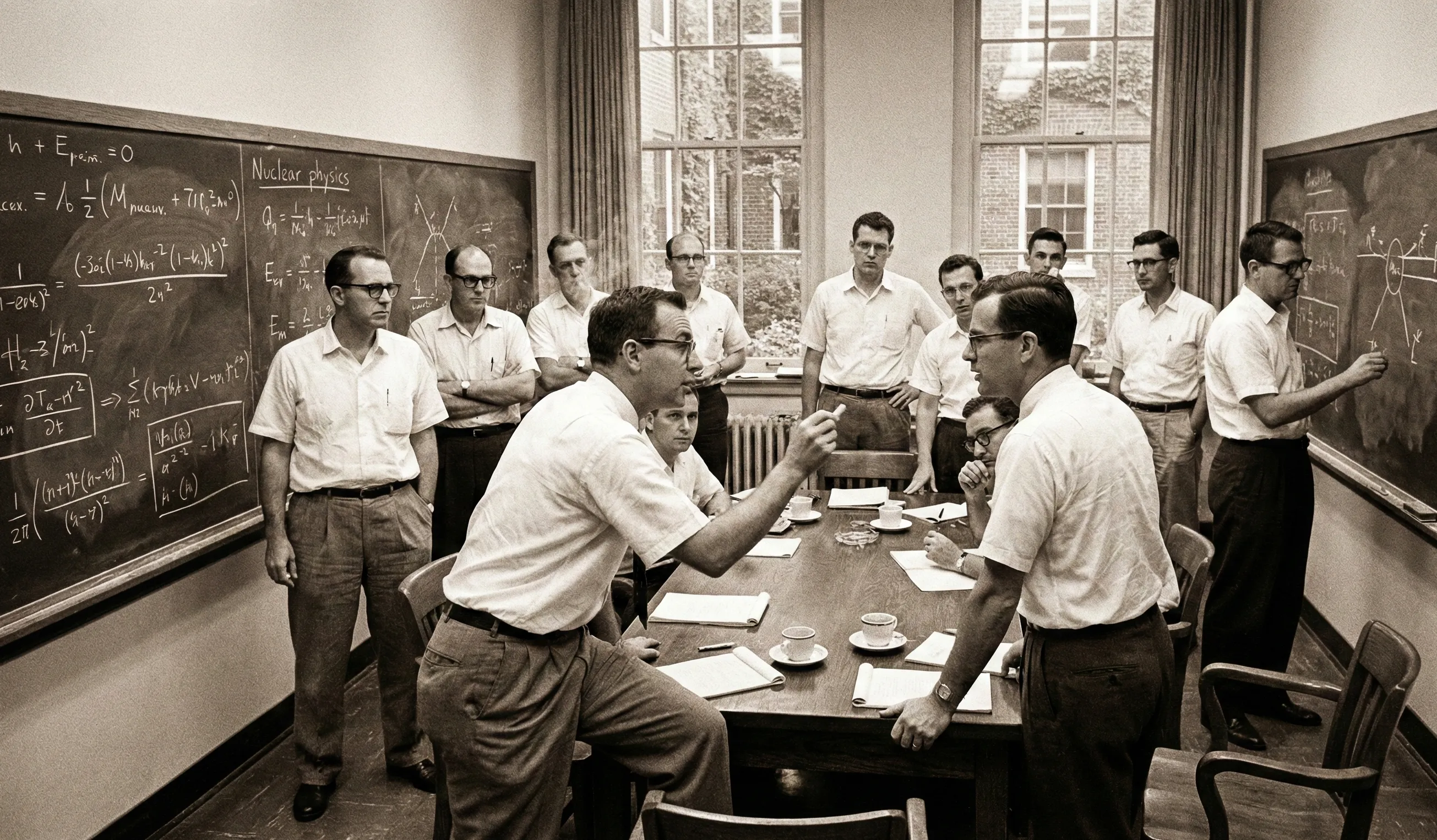
Summer studies became the core JASON activity. Members would gather for weeks at a time, typically at university facilities, to study problems assigned by defense agencies. The concentrated attention of brilliant minds produced insights that bureaucracies could not generate.
The studies remained classified, but their influence became evident in policy debates. Arguments about missile defense, nuclear strategy, and weapons development often reflected JASON analysis. The group became a shadow presence in defense discourse.
> JASON operated at the intersection of scientific expertise and national security, visible to insiders but largely unknown to the public.
The Vietnam War brought JASON into controversy. The group studied counterinsurgency, electronic barriers, and other topics related to the conflict. Some of this work became public, revealing the scientists' involvement in what many came to see as an unjust war.
Student protests targeted JASON members at their home universities. Activists saw the group as emblematic of scientific complicity in military violence. Some members resigned. Others defended their work as necessary service to the nation.
> The Vietnam experience revealed tensions between scientific advice and political judgment that would never fully resolve.
The controversy tested JASON's cohesion but did not destroy it. The group continued meeting through the 1970s and beyond. It adapted to changed circumstances while maintaining its core mission of providing independent scientific advice to defense agencies.
Membership evolved over time. The original physicists aged and eventually departed. New members brought different specialties as defense problems changed. Biologists, computer scientists, and other experts joined what had been primarily a physics organization.
> Institutional survival required adaptation to changing scientific and strategic landscapes.
The Cold War context that created JASON persisted for three decades. Nuclear strategy, arms control, missile defense, and related topics dominated the agenda. The group's expertise aligned with the central challenges of the era.
By the end of the Cold War, JASON had established itself as a durable institution. It had survived controversy, leadership transitions, and changing defense priorities. The summer studies continued, addressing whatever problems defense agencies brought.
The group remained remarkably obscure despite its longevity and influence. No website existed. Membership was not publicized. Reports stayed classified. JASON operated in shadows that most Americans never knew existed.
Related Articles