Content Disclaimer: This article contains speculative theories presented for entertainment. Readers are encouraged to form their own conclusions.
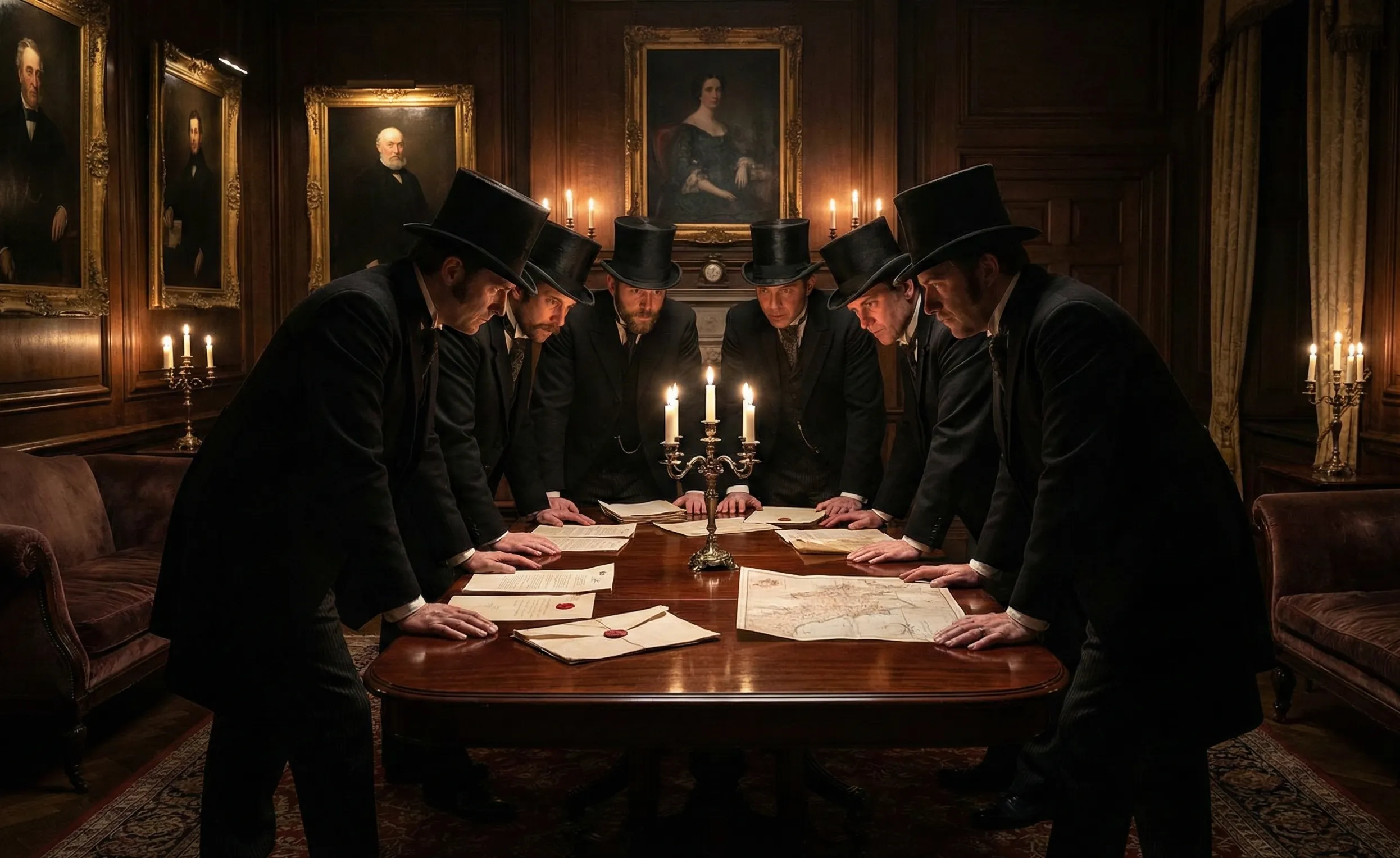
In December 1408, King Sigismund of Hungary founded the Societas Draconistarum, the Order of the Dragon. The ceremony took place in the Hungarian capital, establishing a chivalric order that would shape the politics of Central and Eastern Europe for generations.
Sigismund faced threats from multiple directions. The Ottoman Turks pressed from the south, having already conquered much of the Balkans. Internal rivals challenged his authority. The order would bind loyal nobles to his cause through oaths and mutual obligation.
> The Order of the Dragon emerged from the strategic necessities of a kingdom fighting for survival against overwhelming pressure.
The dragon symbol carried multiple meanings. Christian iconography portrayed the dragon as a symbol of evil, particularly associated with the devil. Saint George's defeat of the dragon was a popular medieval image. The Order's members would be dragon slayers, defenders of Christendom.
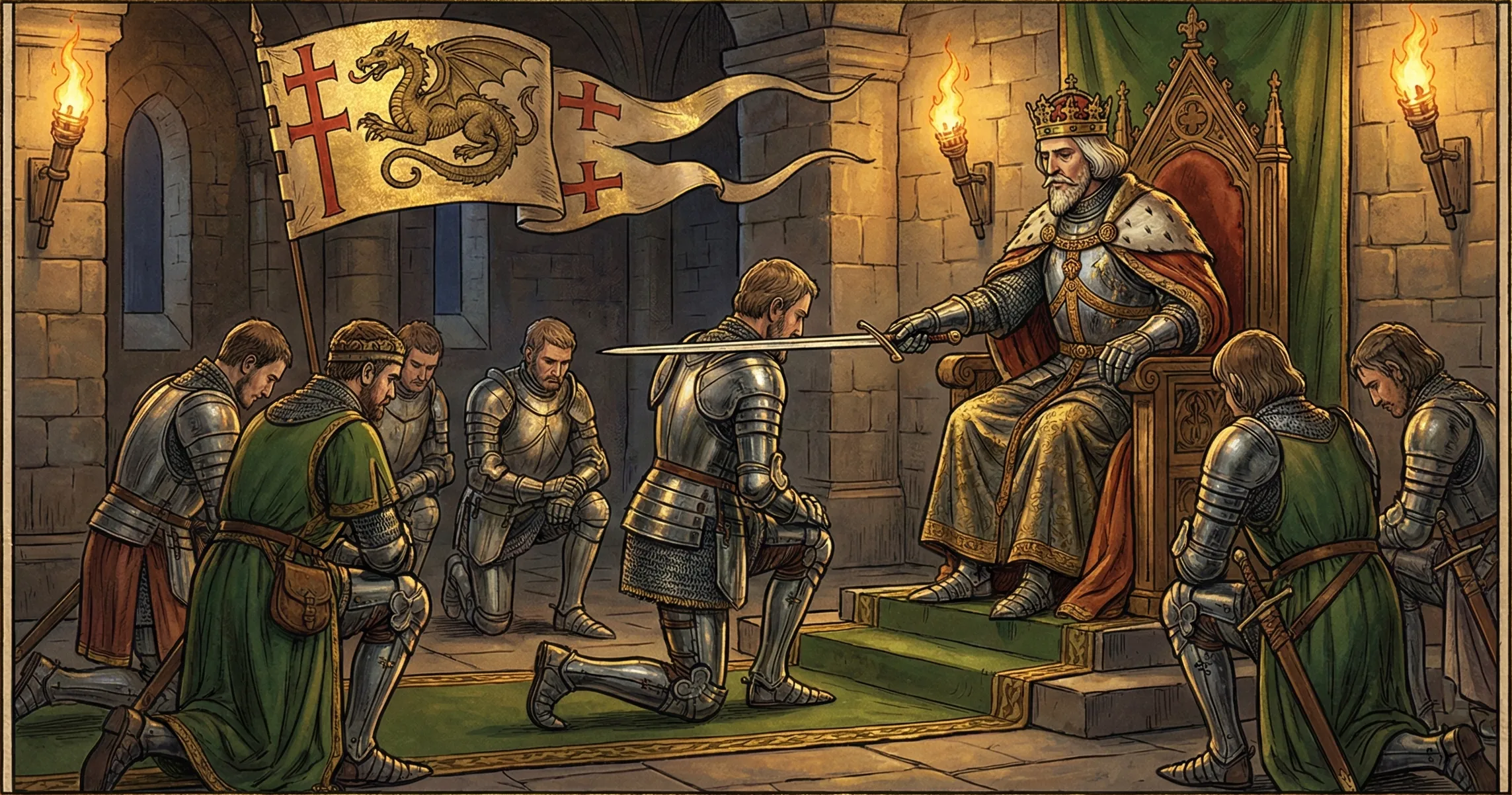
Yet the dragon was also a symbol of power and authority in many traditions. The ambiguity was perhaps intentional. Members wore the dragon as a badge, coiled around a cross, signifying their commitment to both martial prowess and religious devotion.
Initial membership was limited to Sigismund's closest allies and relatives. His second wife, Barbara of Cilli, joined as a founding member, unusual for a chivalric order. Twenty one nobles received the honor at the founding ceremony.
> The Order combined military purpose with political alliance, binding members to the king through shared symbolism and obligation.
Membership expanded gradually over subsequent years. Nobles from across Central Europe sought admission. The prestige of the Order made membership desirable. The obligations that accompanied it were accepted as the price of inclusion.
Members swore to defend the cross against its enemies, to support one another, and to remain loyal to the king. These oaths created bonds that extended across territorial boundaries. The Order functioned as an international alliance within the framework of chivalric honor.
The Battle of Golubac in 1428 demonstrated both the Order's purpose and its limitations. Sigismund led an army against the Ottomans, attempting to recapture a crucial fortress. The campaign failed, and Sigismund barely escaped with his life. The dragon proved unable to defeat the growing Ottoman power.
> Military setbacks did not diminish the Order's prestige, which derived from the honor of membership rather than battlefield success.
Vlad II of Wallachia joined the Order around 1431. His induction occurred at Nuremberg, where Sigismund was being crowned Holy Roman Emperor. Vlad received the privilege of wearing the dragon and adopted it as his symbol.
This membership gave Vlad his epithet. Dracul, meaning dragon or devil in Romanian, became attached to his name. His son, later known as Vlad the Impaler, would be called Dracula, son of the dragon. The name would achieve a fame the original Order never possessed.
> The most enduring legacy of the Order came through a member whose notoriety owed nothing to the organization itself.
The Order's activities included diplomatic missions, military campaigns, and ceremonial gatherings. Members met when circumstances permitted, reinforcing bonds and coordinating efforts. The organization provided a framework for cooperation that formal political structures could not.
Sigismund died in 1437, leaving the Order without its founder and principal patron. The institution persisted but gradually lost coherence. Without a central figure to hold members together, the Order fragmented into regional variations.
By the mid 15th century, the Order of the Dragon had ceased to function as a unified organization. Some members continued wearing the badge. Some territories maintained local traditions. But the coordinated chivalric order that Sigismund had created no longer existed.
> Like many medieval institutions, the Order of the Dragon proved dependent on the personality and power of its founder.
The fall of Constantinople in 1453 demonstrated that the Order had failed in its stated purpose. The dragon slayers had not stopped the Ottoman advance. Christendom's eastern frontier had collapsed. Whatever the Order had accomplished, saving Christian Europe from Islamic conquest was not among its achievements.
Yet the Order left lasting traces. Heraldic symbols, family traditions, and historical memories persisted in the regions where it had operated. The Dracula connection would eventually make the Order famous far beyond what its medieval members could have imagined.
The historical Order of the Dragon was a product of its time: a chivalric organization mixing military purpose, political alliance, and religious symbolism. It functioned for a few decades, achieved limited objectives, and faded into history. What came later was something very different.
Related Articles